
Workplace Insights Series | Lexington Group
The workplace keeps changing. As organizations adapt to hybrid schedules and evolving employee expectations, the most effective spaces support how people actually work.
Insights from one of Lexington Group’s space planning experts reveal a common theme: successful workplaces balance connection, comfort and choice.
What Is the New Purpose of the Office?
Following the pandemic, workplace design emphasized separation. "We went through a phase where everybody wanted high walls and separation, and individual stations for social distancing," our space planner explains.
Today, the focus has shifted toward balance. Employees still need places to concentrate, but they also value opportunities to connect and collaborate.
"I've generally thought that workspaces have become a little more collaborative, with shared work areas and communal areas."
The office is more than a collection of assigned desks. It is a place for collaboration, creativity, relationship building and team engagement.
A More Human-Centric Workplace
Organizations are also creating warmer, more inviting environments.
"I feel the office space in general has leaned a little more toward making it kind of like a home feel as opposed to just strictly a workplace."
Comfortable seating, thoughtfully planned common areas, flexible meeting spaces and café-style gathering areas help support different activities throughout the day. The goal is not to replicate home, but to help employees feel connected and supported.
What Does a Successful Workplace Look Like?
"A successful workplace is just somewhere where everyone feels welcome," our space planner says.
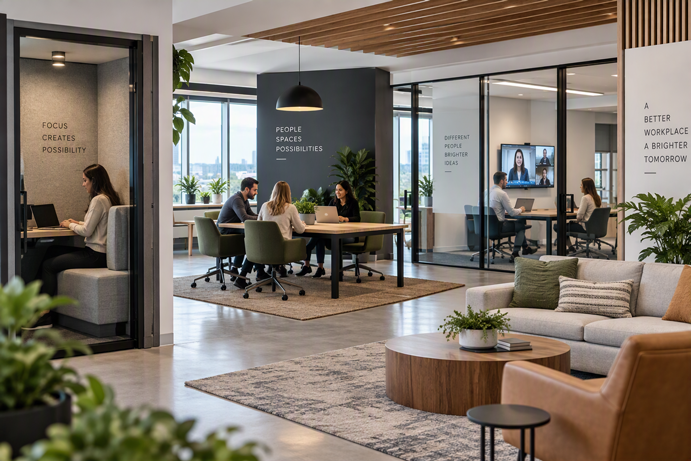
That starts with recognizing that people and tasks have different needs. Some employees need quiet and privacy; others depend on frequent interaction. A successful workplace accommodates both.
Focus settings might include private booths, enclosed workspaces, quiet rooms and individual workstations. Collaborative settings might include shared workstations, open collaboration areas, team meeting spaces and low-panel work environments.
"Some people like quiet individual work," our space planner notes. "Some people may be more team-oriented or have a job that's more team-oriented."
Providing choice allows employees to find the right setting for the work at hand.
Designing for Hybrid Work and Beyond
There is no one-size-fits-all floorplan or furniture package. Flexible workplaces accommodate different people, tasks and changing business needs.
A variety of work settings can support engagement, productivity and collaboration while helping organizations make better use of their space.
At Lexington Group, we believe workplace design starts with understanding people. Examining how employees work, collaborate and use space helps organizations create environments that meet today’s needs and remain effective over time.
The shift from separation toward connection, flexibility and employee experience offers a clear direction: create workplaces where people have choices and feel welcome.
About Lexington Group
Lexington Group helps organizations create workplaces that support productivity, collaboration and well-being through strategic planning, commercial furnishings, workplace solutions and furniture refurbishment services.
Ready to evaluate your workplace? Start the conversation with The Lexington Group.